
Core Training Isn’t Optional.
Written By: Traci Tauferner, LAT, ATC, CSCS | Advanced Tactical Medicine
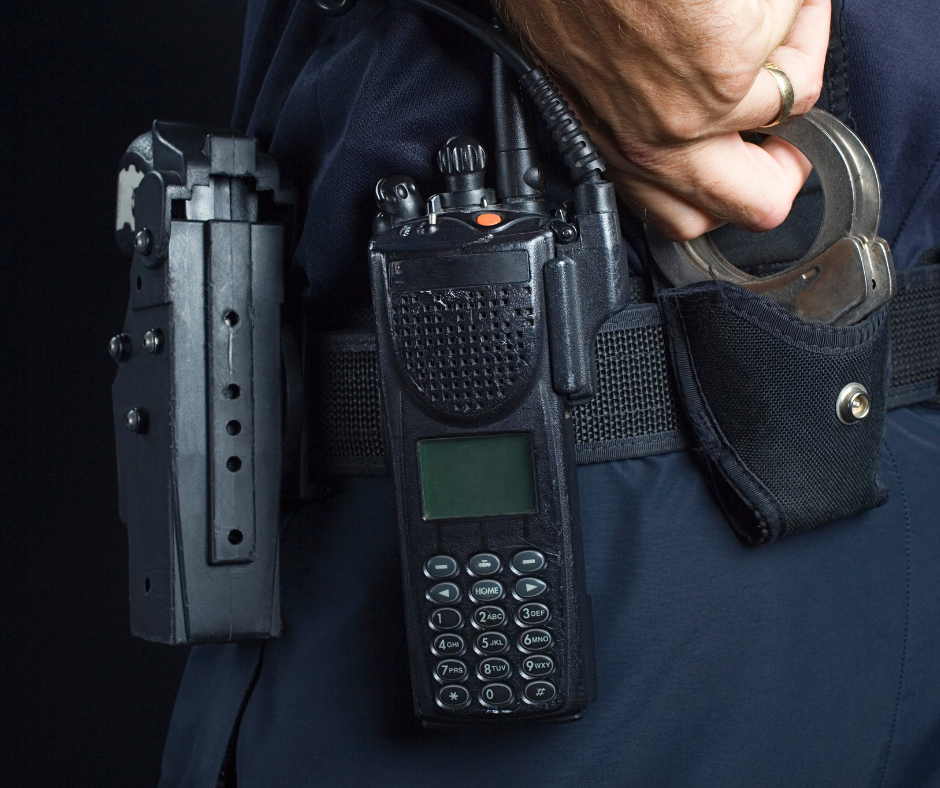
Your duty belt weighs more than a toddler.
Here’s why your core needs to do more than look good.
As someone who regularly speaks to tactical groups on physical readiness strategies, I was warned not to start any presentation by referring to ancient Greek poetry.
Yes, my audiences can be very tough crowds, on a number of different levels. But if U.S. Navy Seals are willing to use a slightly altered version of what the warrior poet Archilochus said more than two centuries ago, it’s good enough for me. And it goes something like this:
“We don’t rise to the level of our expectations; we fall to the level of our training.”
After 15 years working with law enforcement, paramedics, and firefighters, I’ve seen the truth of this timeless statement play out again and again: when the pressure hits, you don’t magically rise to the occasion; you default to your training and preparation. And if your core training starts and ends with crunches, your body will fail you when the stakes are high.
Tactical athletes (yes, that's you) carry 20 to 40 pounds of gear every single day. That extra load shifts your center of mass, messes with your gait, and grinds down your spine and hips over time.
If your core can’t stabilize under that stress, you’re setting yourself up for injury and slower performance when it matters most.
I train public safety professionals for real-world outcomes that include:
· Preventing injuries
· Performing under pressure
· Staying in the game for the long haul
I believe in evidence-based training, like a 2021 study on combat soldiers that found that just 5 minutes of core stability work, 3 times a week, cut injuries by 57% in 14 weeks. Soldiers who trained static-to-dynamic transitions improved balance and proprioception, abilities both consistently low in those who got hurt (Steinberg et al., 2021).
Need to move fast, stay mobile, and carry a load?
Your core is the foundation.
Sprint speed and agility improved after 8 weeks of core work in athletes (Sofuoğlu et al., 2024), which is the same demand you face during foot pursuits or rapid transitions.
Load carriage, pull-up capacity, and 3k run performance all correlated with weekly core training time in cadets, peaking around 120 minutes/week (Chen et al., 2023).
Even marksmanship improves when core training is paired with neuromuscular control strategies because balance and breathwork matter under stress (Lee & Shin, 2025).
How We Train the Core Actually Matters
If your program still looks like a 1990s ab bootcamp, it’s time to evolve. Unstable surfaces (BOSU, suspension systems) improve neuromuscular control, sprint performance, and dynamic trunk strength compared with flat-ground planks alone (Gao et al., 2025).
Bodyweight and instability training outperform traditional equipment in improving balance, which is critical for preventing slips, trips, and poor movement under stress (Barrio et al., 2022).
In my programs, we start with deep activation work (think transversus abdominis) to build control, then progress to integrated, dynamic patterns that mimic job tasks:
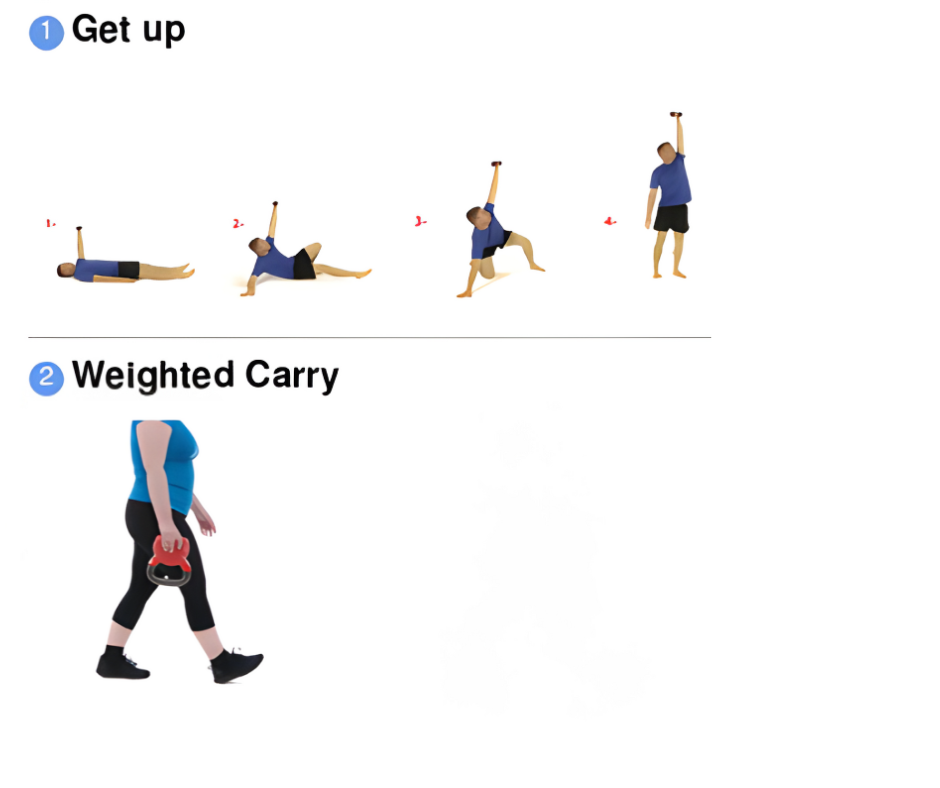
Dead bugs → Turkish get-ups
Bird-dogs → Loaded carries
Your career requires physical readiness for fast transitions, unpredictable terrain, long hours under load, and constant mental stress. Crunches, seriously, won’t cut it. You need:
· Anti-rotation control
· Static-to-dynamic transitions
· Functional trunk stability that lasts through shift 1 and shift 3.
Train the way your job demands or deal with the consequences to your spine, knees, and shoulders. Your gear isn’t getting lighter. Your body isn’t getting younger. Train smart now, so you can keep doing the job you signed up for without breaking down before retirement.
Your community needs you to be healthy.
References:
Steinberg N, Bar-Sela S, Moran U, et al. Injury prevention exercises for reduced incidence of injuries in combat soldiers. J Strength Cond Res. 2021;35(11):3128-3138.
Sofuoğlu C, Güçhan Topçu Z, Bayrakcı Tunay V. The effect of core stability training on ball-kicking velocity, sprint speed, and agility in adolescent male football players. PLoS One. 2024;19(6):e0305245.
Chen Z, Du J, Hu Y, et al. Weekly cumulative extracurricular core training time predicts cadet physical performance: a descriptive epidemiological study. Heliyon. 2023;9(4):e14756.
Lee YJ, Shin D. Transcranial direct current stimulation and core stabilization enhance shooting performance and balance in athletes: a randomized controlled trial. Med Sci Monit. 2025;31:e949848.
Gao J, Liu D, Zhu J, Guo Q, Wang X. Instability core training vs traditional core training on trunk strength and sprint performance among athletes: a systematic review and meta-analysis. PeerJ. 2025;13:e20212.
Barrio ED, Ramirez-Campillo R, Garcia de Alcaraz Serrano A, Hernández-García R. Effects of core training on dynamic balance stability: a systematic review and meta-analysis. J Sports Sci. 2022;40(16):1815-1823.